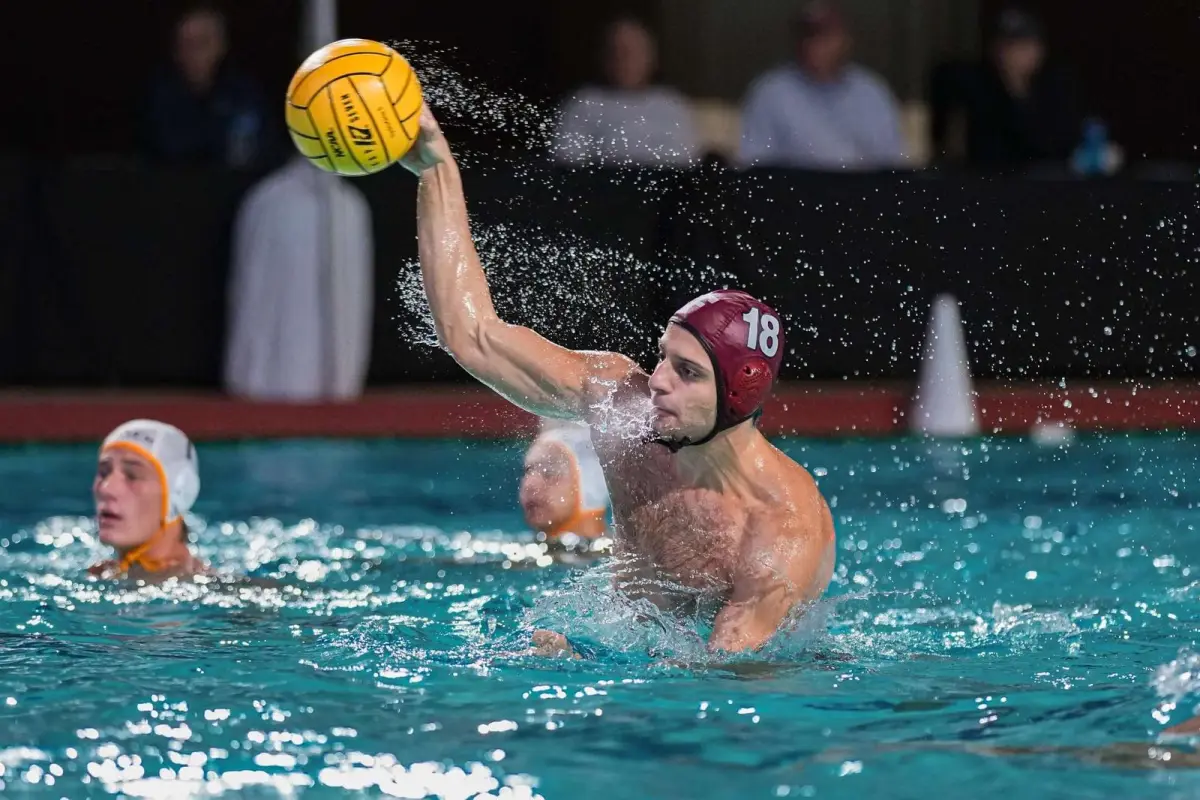
Most new water polo players and parents watch the ball first. They notice the passes, shots, blocks, and saves. But the skill that makes all of those actions possible is happening under the surface.
The eggbeater kick is the foundation of water polo. It allows athletes to stay vertical, keep both hands free, rise out of the water, hold position, defend, pass, shoot, and play with control.
When an athlete has strong legs, the game changes. They can see more of the pool, stay balanced under pressure, and make better decisions because they are not fighting just to stay above water.
What is the eggbeater kick?
The eggbeater kick is a circular kicking motion used to keep the body stable and elevated in the water. Unlike a flutter kick, which is used for swimming forward, eggbeater is designed to support a player in a vertical or semi vertical position.
Each leg moves in a circular pattern. The knees stay bent, the feet stay active, and the legs work in an alternating rhythm so the athlete can create steady lift instead of bouncing up and down.
The goal is not just to stay afloat. The goal is to create a strong base so the athlete can pass, shoot, defend, fake, block, and move without relying on their hands for balance.
Why eggbeater matters in water polo
Height changes everything
The higher an athlete can get out of the water, the more dangerous they become. Better height helps with shooting angles, passing lanes, blocking, and seeing over defenders. A strong eggbeater gives athletes the base they need to play above the water instead of sitting low in it.
Both hands need to be free
Water polo players cannot depend on their hands to stay up. Their legs need to do the work so their hands can receive passes, protect the ball, fake, shoot, block, or fight for position.
Defense and goalkeeping depend on legs
Eggbeater is not just for shooters. Defenders need strong legs to hold position, move laterally, and stay balanced against contact. Goalkeepers rely on eggbeater for explosive lifts, quick side to side movement, and high blocks.
How the eggbeater kick works
A good eggbeater kick starts with body position. Athletes should stay tall through the chest, keep the core engaged, and let the hips sit slightly under the body. The movement should feel controlled, not stiff.
The power comes from the hips, legs, ankles, and feet working together. Each leg moves in a circular path, with the foot turned slightly outward so it can press against the water. When the feet are too relaxed or pointed, the athlete loses surface area and creates less lift.
The rhythm matters. One leg should be pushing while the other leg is resetting, which creates a steady base. When the rhythm is uneven, the athlete usually bobs up and down, wastes energy, and loses balance.
Common eggbeater mistakes
Using the hands for balance
Many beginners drop their hands into the water when they get tired. This hides the real problem. Athletes should practice keeping the hands out of the water so the legs learn to support the body.
Kicking down instead of circling
Eggbeater is not a straight up and down kick. If the legs are chopping downward, the athlete may get short bursts of height but will get tired quickly. The motion should be circular and steady.
Letting the feet relax
The feet need to stay active. If the athlete points the toes or lets the ankles go soft, they lose the paddle shape that helps them press water and create lift.
Uneven rhythm
Most athletes have one stronger leg. If one leg does most of the work, the body becomes unstable. Single leg drills can help athletes find and fix the imbalance.
Tensing the whole body
Eggbeater should be strong but not rigid. If the athlete is too tight through the hips, knees, or core, they waste energy and lose fluidity.
How to improve your eggbeater kick
- 1. Learn the movement at the wall: Start by holding the wall or sitting near the edge of the pool and practicing the circular leg motion slowly. The goal is to learn the shape of the kick before trying to hold the body high in deep water.
- 2. Practice vertical holds: Move into deep water and practice holding a vertical position with the hands out of the water. Start with short sets and focus on staying steady instead of sinking, bouncing, or using the arms.
- 3. Isolate one leg at a time: Single leg eggbeater helps athletes find weaknesses. Practice with one leg while holding the wall, then switch sides. The goal is to make both legs strong enough to contribute evenly.
- 4. Train height changes: Once the athlete can hold position, practice moving from low to high. This helps with shooting, passing, blocking, and goalie movement.
- 5. Add the ball: After the legs become more automatic, add passing, catching, faking, and shooting. The goal is for the athlete to think about the game while the legs keep them stable underneath.
Eggbeater drills for beginners
- Arms out hold: Keep both hands out of the water and hold a vertical position for 20 to 30 seconds. Focus on staying balanced without using the hands.
- Ball hold: Hold a water polo ball above the head while eggbeatering. This forces the legs to support the body.
- One leg eggbeater at the wall: Hold the wall and use one leg at a time. This helps identify which leg is weaker.
- Low to high lift: Start in a low vertical position, then increase the kick to rise higher out of the water. Hold the high position for a few seconds, then return to neutral.
- Pass and hold: Receive and pass the ball while maintaining height. The goal is to keep the body stable while the hands are busy.
What parents should watch for
Parents do not need to understand every technical detail to recognize a good eggbeater. Watch whether the athlete can keep both hands free, stay balanced, hold height, and avoid sinking during passes or shots.
If an athlete is constantly using their hands to stay up, sitting low in the water, or losing balance during contact, their eggbeater probably needs more work.
Strong eggbeater takes time. It is not built in one week. It improves through consistent practice, leg strength, hip mobility, and better water polo awareness.
How eggbeater helps every position
Eggbeater matters for every water polo position.
Goalies need it to move side to side and explode upward for saves. Centers need it to hold position under contact. Center defenders need it to battle for body position without sinking. Perimeter players need it to pass, shoot, fake, and defend while staying balanced. Wings need it to finish quick chances around the cage.
No matter the position, better legs give athletes more time, more control, and better decision making in the water.